Venezuela: Why Markets Price Legitimacy, Not Force
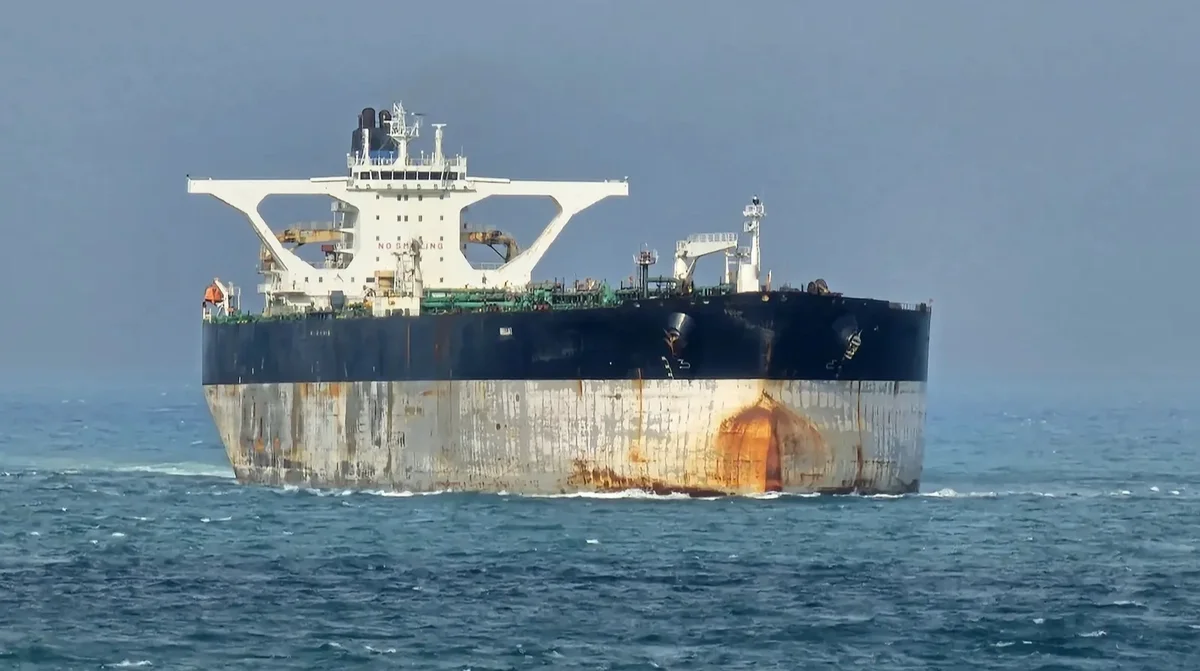
Russia has deployed navy assets to escort the disputed oil tanker ‘Marinera’ across the Atlantic to safe harbour. © RT Graphica
Beyond the Spectacle of Arrests and Tanker Chases: The Real Crisis for Operators is Enforceability.
⟁ OPINION | Arno Saffran, Mon 02 Feb, 2026For operators and lenders, the arrest of a sitting president—particularly one whose legality will be contested—does not simplify political risk; it restructures it.
Disruption of this scale rarely clarifies authority quickly enough to support capital deployment. Instead, it creates a recognition gap in which contracts may exist formally but lack enforceability, and counterparties hesitate to proceed without assurance that today’s commitments will withstand tomorrow’s settlement.
In the extractive industries, that uncertainty is magnified. Oil and mining projects depend less on nominal territorial control than on continuity of legal, fiscal, and regulatory regimes. Where the legitimacy of transition is disputed, operators confront the possibility that licenses granted under one authority may be challenged by the next. For lenders and project finance institutions, the exposure is more immediate: security interests linked to future production are only as robust as the sovereign framework underpinning revenue flows. Arrest without broad international recognition can immobilise value rather than release it.
This reality places negotiation—not regime change—at the centre of commercial calculation. Hydrocarbon and mineral assets become instruments within a broader settlement, not immediately financeable resources. Sanctions relief, contract validation, debt restructuring, and the disposition of previously expropriated assets converge into a single negotiating architecture. Until those variables align, reserve size offers limited reassurance. Balance sheets respond to legitimacy and enforceability, not geology alone.
The broader implication is that extractive opportunity in contested transitions does not reward speed. It rewards strategic positioning. Those able to navigate recognition dynamics, sovereign risk, and commercial diplomacy ahead of formal resolution will be best placed when assets become operationally viable. Until then, the arrest itself alters little. What matters is the framework that follows.
For global oil and mining markets, the recent U.S.-led intervention in Venezuela presents a potentially misleading signal. The detention of a sitting president—especially one whose status will remain legally disputed—is not a clarifying event that reduces risk. It is a systemic shock that redistributes it, creating a volatile recognition gap. In this space, agreements may exist in documentation yet lack practical enforceability, while counterparties pause to assess whether political authority will consolidate or fragment.
Accordingly, negotiation—not political spectacle—moves to the forefront of commercial strategy. Assets become bargaining instruments within diplomatic and legal processes rather than immediately monetisable reserves. The pathway to value depends on an integrated settlement encompassing sanctions recalibration, contractual continuity, debt realignment, and treatment of state-controlled entities. Until these elements converge, Venezuela’s resource endowment provides limited comfort. Capital markets price institutional stability and legal durability before they price barrels or tonnes.
The Battle for The Marinera
The confrontation surrounding the Marinera—the vessel formerly known as Bella 1—did not originate in the North Atlantic. Its origins lie in a calculated escalation of maritime enforcement that has reshaped the parameters of global energy trade.
The prelude was “Operation Southern Spear.” On December 10, 2025, U.S. special operations forces, acting pursuant to a Department of Justice warrant, seized the VLCC Skipper in international waters near Venezuela. The legal basis cited the transport of sanctioned crude, expanding upon prior U.S. Treasury measures alleging connections to Iranian trading networks—claims rejected by Caracas and its partners as unlawful extraterritorial enforcement.
This action marked not a conclusion but an escalation. On December 17, U.S. authorities announced a naval quarantine of sanctioned vessels bound for Venezuelan ports. The commercial impact was immediate: tanker movements slowed sharply, disrupting export flows that underpin the national balance of payments. Within weeks, constrained storage capacity forced PDVSA to curtail production in the Orinoco Belt—illustrating how maritime enforcement can translate directly into upstream operational consequences.
International reaction was swift. UN officials raised concerns regarding compliance with established maritime norms. China criticised unilateral enforcement actions. Russia characterised the measures as legally indefensible. A broader debate emerged over whether a single state may assert expansive authority over global shipping lanes under its domestic sanctions regime.
Against this backdrop, the Marinera episode unfolds. Its Atlantic pursuit represents not a discrete maritime incident but the operational manifestation of a new enforcement doctrine. Economic statecraft has shifted toward direct asset control. Naval assets are deployed not solely to deter but to interdict, escort, and physically influence the movement of strategic commodities. For extractive markets, this signals a structural change: geopolitics is no longer an external variable. It is an active pricing mechanism.
The Marinera itself—devoid of cargo yet symbolically charged—has become more than a transport vessel. Its mid-ocean reflagging to Russia was not merely administrative; it was strategic. It asserted that the asset had moved into a different sovereign orbit. The subsequent pursuit by U.S. authorities and escort by Russian naval units constituted a tangible contest over whose legal and economic jurisdiction prevails on the high seas. This was not abstract diplomacy but visible power projection affecting commodity logistics.
The implications extend beyond a single tanker. Established maritime conventions risk being subordinated to overt demonstrations of state capacity. Markets must now account not only for supply-demand fundamentals but for the possibility of direct naval intervention in contested trade flows. The Marinera therefore becomes emblematic of a broader transition: resource security is increasingly shaped by strategic rivalry as much as by commercial negotiation.
The Commercial Imperative in a Contested Landscape
This environment of contested legitimacy defines the operating landscape for international extractive operators. For companies with existing exposure, prudence dictates moderated activity, preservation of contractual optionality, and calibrated engagement with all plausible future authorities. The objective is continuity under any recognised settlement.
For prospective entrants and lenders, emphasis must shift upstream—away from construction timelines and toward relationship architecture, policy alignment, and sovereign risk assessment. The decisive commercial work now occurs in informal channels where future regulatory frameworks are implicitly shaped. It is terrain requiring commercial diplomacy as much as technical capability.
For capital providers, caution becomes paramount. Financing structures will favour shorter maturities, comprehensive political risk insurance, conditional disbursement triggers, and, where possible, multilateral participation. Large-scale re-entry of capital will depend on the emergence of a credible, negotiated pathway restoring institutional continuity and judicial reliability.
The overarching conclusion is clear: extractive opportunity in contested transitions does not reward haste. It rewards strategic depth. Value will accrue to those with the networks, discipline, and geopolitical literacy to operate through protracted negotiation over recognition and enforceability.
The events in Caracas may command headlines. The enduring commercial reality is that enforceable agreements—not political theatre—form the basis of extractive value. In oil, gas, and mining alike, the ultimate asset is not the resource in situ but the stability of the legal and sovereign framework governing its development. In Venezuela, that framework remains unsettled.
Negotiation, Geopolitics, and the Primacy of Law
The Venezuelan case functions not as an exception but as a contemporary illustration of modern extractive strategy. Commercial resilience now depends on integrating negotiation capability, geopolitical awareness, and adherence to international legal norms.
Long-term value in capital-intensive sectors rests upon predictable frameworks. The erosion or circumvention of established legal channels—irrespective of short-term tactical outcomes—introduces volatility incompatible with multi-decade investment horizons. When principles of sovereign equality and multilateral governance are weakened, contractual durability across complex jurisdictions correspondingly declines. Major resource investors have a structural interest in reinforcing, rather than bypassing, rule-based systems.
This reality elevates negotiation from transactional execution to strategic architecture. Agreements must be structured to endure political transition, sanctions recalibration, and diplomatic realignment. That requires engagement beyond host governments, encompassing regional stakeholders and international institutions to establish layered legitimacy.
Consequently, geopolitics shifts from background analysis to operational determinant. The executive capable of aligning commercial objectives with national strategic interests becomes central to enterprise resilience. Projects succeed not solely through engineering or finance, but through calibrated alignment with sovereign priorities.
The lesson is unambiguous: in the contemporary extractive sector, the most valuable asset is the enforceable right to operate. Securing that right demands disciplined negotiation, geopolitical fluency, and respect for international legal order. Where these elements are absent, resource endowment alone cannot anchor value.
References:
Russia sends submarine to escort tanker the U.S. tried to seize off Venezuela (WSJ / Reuters) — Coverage of Russia’s deployment to protect the purchased tanker formerly known as Bella 1.
U.S. plans to intercept tanker involved in Venezuelan oil trade, days after Maduro’s capture (CBS News) — U.S. intelligence and Coast Guard pursuits off Venezuela.
Tanker defies Coast Guard as US escalates Venezuela oil blockade (San.com) — Report on the Bella 1 vessel resisting U.S. Coast Guard boarding.
U.S. Coast Guard Cutter Seen Pursuing Fleeing Russian Oil Tanker For First Time (TWZ) — Focused on the active pursuit of the reflagged tanker near Venezuela and into the Atlantic.
Russia asks US to halt chase of Venezuela tanker claiming Russian flag (San.com) — Russia’s diplomatic protest against the U.S. pursuit of the tanker.
Venezuelan ‘dark fleet’ tanker evades US Coast Guard as Russia sends submarine to escort vessel: reports (AOL) — Summary of the vessel’s evasion and escort by Russian naval assets.
US aircraft monitor tanker off Ireland that tried to evade Venezuela blockade (The Guardian) — Reporting on U.S. military monitoring of the tanker off the coast of Ireland (Éire).
Russia Sends Naval Escorts To Aid Oil Tanker Pursued By U.S., Reports Say (Forbes) — Analysis of the escape, reflagging to Russia and ongoing pursuit.
Oil tanker pursued by US now has a Russian flag painted on its side (NZ Yahoo News) — Details on the vessel painting a Russian flag to complicate enforcement.
US moves to seize Russian‑flagged shadow fleet tanker hauling Venezuelan oil (UNITED24 Media) — Update on the legal and pursuit status of the reflagged tanker.
How relevant and useful is this article for you?
★ 117
UNAMINE works across the mining & metals value chain, positioning people who form the critical bridge to early-stage relationships in complex regions.