The DRC's 100-Year Cobalt Story
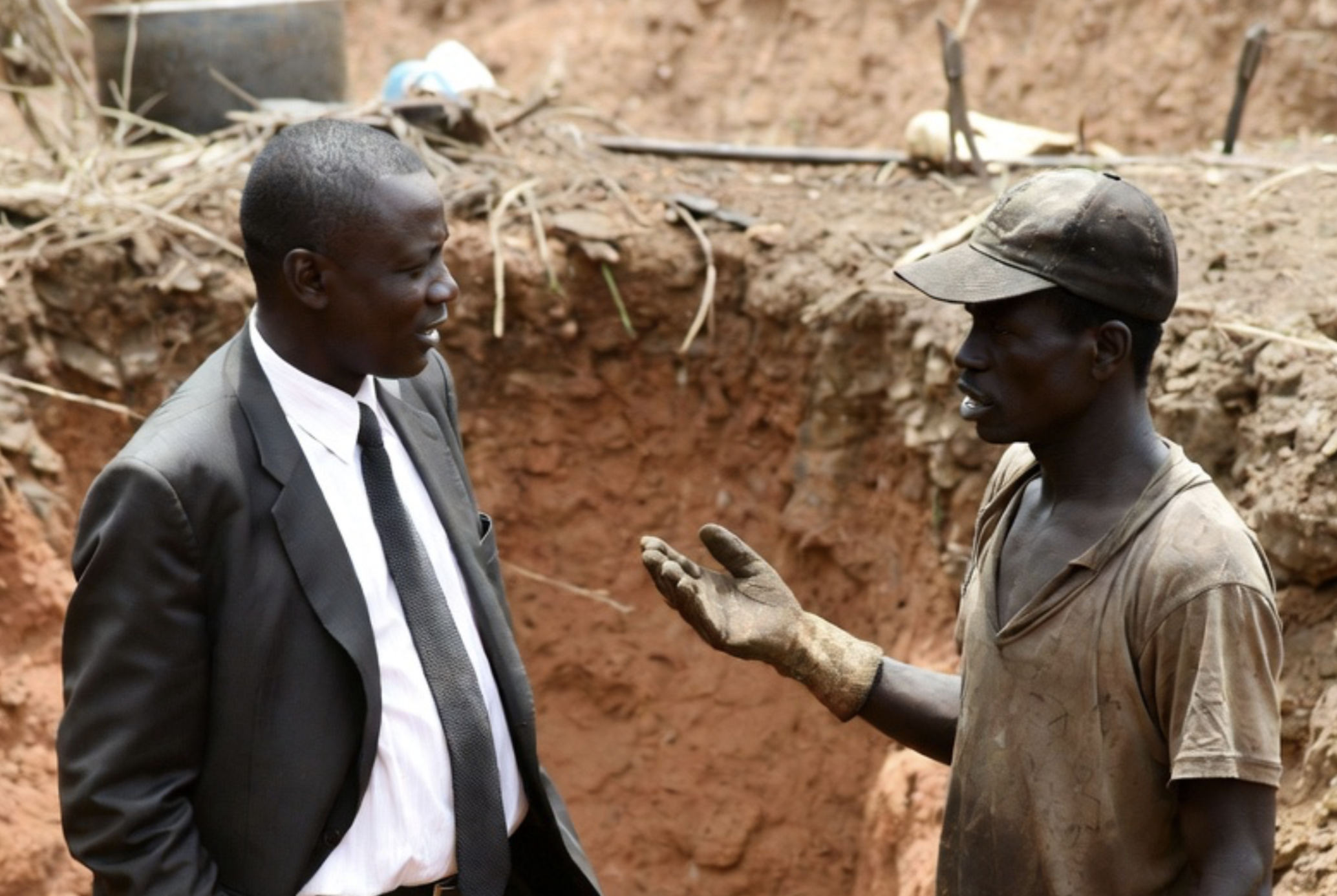
Image: Reproduced with permission by Zanele Maluleka
Why the World's Most Critical Battery Metal Remains the World's Most Misunderstood Supply Risk
⟁ OPINION | Arno Saffran, Wed 04 Feb, 2026Every electric vehicle battery manufactured today almost certainly contains cobalt that passed through a single country: the Democratic Republic of the Congo (DRC). With roughly seventy percent of global mine production concentrated in one of the world's most politically complex nations, cobalt has become the defining test case for how the global clean energy transition manages supply chain vulnerability. And yet the story of cobalt in the DRC is far more nuanced — and far more instructive — than the headline risk figures suggest.
Understanding this history is not merely an academic exercise. For mining equipment manufacturers, engineering contractors, project developers, and investors operating in central Africa, the arc of the DRC's cobalt century offers a remarkably precise guide to what actually disrupts supply, what does not, and what will determine the reliability of future output. For recruiters placing commercial leaders into these organisations, it defines the operating environment those candidates will navigate.
The DRC's cobalt output grew at a compound annual rate of twenty percent between 1995 and 2020 — one of the most sustained commodity production growth rates in modern mining history.
This article draws on a century of production data to examine when, why, and how DRC cobalt supply has been disrupted — and offers a clear-eyed assessment of the risks and opportunities that confront the market today.
1. From Belgian Colony to Global Chokepoint
Commercial cobalt extraction in what is now the DRC began in 1924, when the Belgian mining company Union Minière started recovering cobalt as a byproduct of copper operations in the Katanga region — today encompassing Lualaba, Haut-Katanga and Haut-Lomami provinces. Within two years the operation had become the world's largest cobalt producer. The structural logic established then has never fundamentally changed: DRC cobalt is, and always has been, a byproduct of copper mining. That single fact carries enormous commercial implications that are routinely misunderstood.
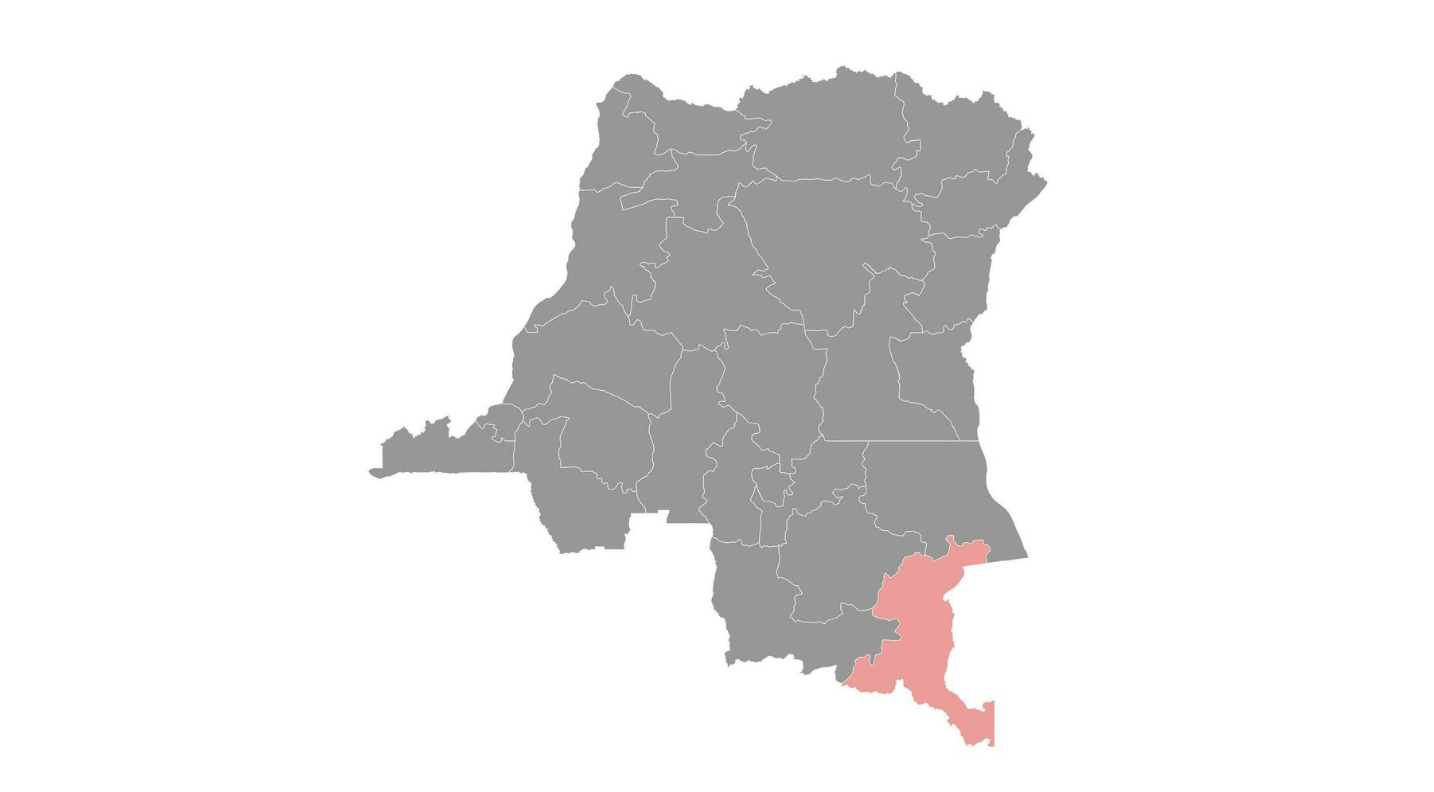
Haut Katanga province, DRC.
Because cobalt in the DRC is extracted as a byproduct of copper, the decision about how much copper ore to mine is driven entirely by copper economics — price, cost, grade and infrastructure. The cobalt that comes with it is recovered when the cobalt price makes that recovery worthwhile, and discarded into waste dumps when it does not. This explains one of the more counterintuitive features of the DRC's cobalt history: some of the most profitable cobalt recovery operations of the late twentieth century were not mines at all, but the reprocessing of waste dumps created decades earlier when cobalt prices were too low to justify recovery.
1.1 World War, Cold War and the Strategic Metal Premium
Cobalt's strategic importance crystallised during the Second World War, when American imports from the Belgian Congo climbed almost twelvefold in five years to meet demand for high-speed cutting tools, jet engine superalloys, and eventually propulsion systems for nuclear weapons.
The US Congress enshrined cobalt's criticality in peacetime legislation requiring national stockpiles sufficient for three years of war production. This geopolitical premium on cobalt supply — which created the conditions for superpower competition over the DRC's resources throughout the Cold War — has never fully dissipated. Today it has simply found a new vehicle: the lithium-ion battery.
By 2020 nearly two-thirds of global refined cobalt was consumed in battery manufacturing. The compound annual growth rate of cobalt's battery use, while moderating from its peak, remains solidly double-digit. The technologies that replaced jet engine superalloys and weapons systems as the primary driver of cobalt demand — electric vehicles, grid storage, portable electronics — are if anything more politically sensitive, given the Western world's stated decarbonisation commitments. The strategic anxiety around cobalt supply is therefore structurally identical to its Cold War predecessor. Only the battleground has changed.
2. The Real Anatomy of Supply Disruption
The conventional narrative presents DRC cobalt as perpetually on the verge of crisis. A more disciplined analysis of a century of production data reveals something considerably more specific: there have been major disruptions, but they had identifiable and largely structural causes. More remarkably, some of the events most widely blamed for supply disruptions — including two armed invasions of the cobalt-producing region — actually coincided with increases in output.
2.1 Transportation As The Single Largest Historical Disruptor
The most consequential supply disruption in DRC cobalt history had nothing to do with mining. In 1975, fighting between rival factions in the Angolan civil war destroyed the Benguela railway — at the time the primary route for DRC copper-cobalt exports to the Atlantic coast. Within three years, production had fallen by more than a third from its 1974 peak. It took five years to return to pre-disruption levels.
The damage was compounded by the geopolitics of the conflict. The Angolan government, backed by the Soviet Union, denied Mobutu's DRC access to the repaired line as a consequence of his support for Angolan rebel factions. The DRC was forced onto inferior alternative export routes — slower, more expensive, and lower capacity — at precisely the point when the world's largest cobalt market, the United States, was consuming the metal at record rates.
This lesson is directly applicable today. The Copperbelt's export infrastructure — roads to Dar es Salaam and Durban, the TAZARA railway, the Lobito Atlantic Railway corridor being rehabilitated by the G7 Partnership for Global Infrastructure and Investment — remains the single most consequential determinant of whether DRC cobalt reaches global markets reliably. The companies investing in that infrastructure, and the EPC firms building it, are providing a service whose value to the global battery supply chain arguably exceeds that of the mines themselves.
2.2 Mobutu Nationalisation
When Mobutu nationalised the DRC's mining sector in 1967, displacing Union Minière and eventually consolidating assets under the state company Gécamines, the immediate production impact was modest — a fourteen percent decline over two years, followed by recovery. The far more damaging consequences took two decades to fully materialise.
Throughout the 1970s and 1980s, Gécamines received international loans and expanded production to a peak above 33,000 tonnes in 1986. But the fundamental disease of nationalised asset management — chronic underinvestment in maintenance, politically driven staffing decisions, corruption, and the prioritisation of copper over cobalt recovery — was silently undermining the physical infrastructure. In 1990 the Kamoto underground mine, then the world's largest, suffered a catastrophic collapse. The KOV open pit, directly adjacent, flooded and became inoperable. Both failures were attributable not to geological misfortune but to maintenance neglect. Output that had stood at nearly 20,000 tonnes per year fell to under 1,000 tonnes within four years.
DRC cobalt production did not return to its 1986 peak until 2008 — a gap of twenty-two years. That is the origin of cobalt's reputation as a high-risk supply. It was not produced by conflict. It was produced by a state-owned enterprise that failed to maintain what it was given.
2.3 The Wars That Did Not Stop Production
Perhaps the most striking finding in the century of production data concerns the two Shaba conflicts of 1978 and 1979, when Katangan secessionist forces backed by Soviet-aligned Angola invaded the DRC's cobalt-producing heartland. Western governments and commodity markets reacted with something close to panic — the cobalt price increased more than fourfold over two years. In reality, DRC cobalt mine production increased during both conflicts. The price spike was driven by fear and Soviet stock-buying, not by any actual reduction in output.
Similarly, despite two full-scale African wars fought partly over DRC resources between 1996 and 2003 — involving the armies of Rwanda, Uganda, Zimbabwe and others — cobalt mine production increased sevenfold over that period. Artisanal miners, small joint ventures, and a cast of controversial private investors kept ore moving through damaged infrastructure and contested territory. The resilience of physical extraction to political chaos, when the physical assets remain intact, is one of the most consistent themes of the entire century.
3. The Chinese Transformation of DRC Cobalt
The story of how Chinese capital rebuilt the DRC's cobalt industry from near-zero in the late 1990s to global dominance by the 2020s is one of the most consequential strategic resource plays of the modern era — and one that most Western industry participants understood far too late.
3.1 The Conditions That Created the Opening
As Gécamines collapsed in the early 1990s, Western mining companies assessed the DRC and, by and large, retreated. Their hesitation was commercially rational: the DRC had just experienced a mining industry nationalisation that destroyed twenty years of invested value, the government was unstable, infrastructure was deteriorating, and the rule of law was absent. Companies including several Canadian and American firms that did venture into DRC projects found their contracts reviewed, renegotiated, or cancelled — often after substantial capital had been committed.
Meanwhile China was constructing a different calculus. Its battery manufacturing industry was expanding at rates that could not be serviced by domestic cobalt production. In 1999 the Chinese government launched its Going Out Strategy, explicitly encouraging state-backed companies to secure strategic mineral assets overseas. The DRC — with its world-class cobalt endowment, collapsed state mining enterprise, and urgent need for foreign investment and infrastructure financing — was a near-perfect strategic fit. The Kabila family's long-standing political relationship with Beijing, extending back to Laurent Kabila's time as leader of a Marxist enclave in eastern DRC, smoothed the diplomatic path.
3.2 Minerals for Infrastructure — The Deal That Changed Everything
The pivotal moment came in 2007, when the DRC government concluded what became known as the 'minerals for infrastructure' agreement with Chinese state-backed entities. In exchange for billions of dollars in infrastructure loans for roads, railways and public buildings, China received development rights over mineral concessions with enormous contained copper and cobalt potential. The logic was blunt: the DRC needed infrastructure it could not finance; China needed cobalt it could not produce domestically. Both parties got what they wanted.
The agreement accelerated a trend already underway. Chinese traders and processors had been purchasing artisanal and small-scale cobalt ore since the early 2000s, and larger Chinese firms had begun acquiring processing facilities and development projects in 2005 and 2006. After 2007 the pace of Chinese investment intensified sharply. By the mid-2010s Chinese firms had acquired, or were acquiring, controlling interests in many of the DRC's most significant cobalt-producing operations.
3.3 What Chinese Control of Refining Actually Means
The Chinese position in DRC cobalt is often framed as a mine ownership story. In practice the more consequential position is in refining. China's cobalt chemical refining capacity grew from a standing start in the early 2000s to absorb the vast majority of DRC intermediate cobalt production — primarily in the form of crude cobalt hydroxide — by the 2010s. When operations like Tenke Fungurume, developed by American firm Freeport-McMoRan, were acquired by Chinese company CMOC (China Molybdenum), the consequence was not merely a change in mine ownership. It was the integration of a major cobalt mine into a supply chain optimised to deliver battery-grade chemicals to Chinese cathode manufacturers — with progressively less material available to Western refiners.
This is the real nature of the cobalt supply risk confronting Western battery manufacturers and automotive OEMs. It is not primarily political instability in the DRC. It is the systematic vertical integration of the cobalt supply chain by Chinese firms, from mine to cathode precursor, in a way that leaves non-Chinese downstream consumers structurally dependent on a market that may not prioritise their access.
4. The Contemporary Landscape
4.1 World-Class Assets, World-Class Complexity
The irony of the DRC's current position is that it hosts some of the most technically impressive mining operations on earth — operations that would be celebrated as national champions in any other jurisdiction — in a country whose governance scores remain among the lowest globally. Kamoa-Kakula, developed by Canadian company Ivanhoe Mines in joint venture with Zijin Mining and the DRC government, has rapidly established itself as one of the highest-grade, lowest-cost copper operations in the world, producing cobalt as a significant byproduct. Kamoto, after decades of troubled history under Gécamines and then private operators, is expected to become the highest-producing cobalt operation on earth.
The investment decisions that produced these assets were not made naively. They were made by sophisticated operators with a clear-eyed understanding of the DRC's risks and a belief — substantiated by the century of production history — that well-capitalised, technically competent operations with diversified export routes could produce cobalt profitably even through periods of political turbulence. The key variable was not country stability. It was asset quality and operational capability.
4.2 The Regulatory Pendulum
The DRC government's relationship with its mining sector has followed a consistent pattern since independence: periods of relative stability and investor confidence, punctuated by contract reviews, code revisions and renegotiations that reset the terms of investment. The 2018 Mining Code, which introduced a fifty percent super-profit tax and increased cobalt royalties from two to ten percent, prompted Glencore to suspend its Mutanda operation — then the world's largest cobalt mine — for what the company described as economic reasons. That the suspension was announced shortly after the new code took effect was noted by most market observers.
For EPC and OEM firms operating in this environment, the regulatory pendulum is a commercial reality that must be priced into project assumptions. The history suggests that total collapse — the Gécamines scenario — requires the confluence of regulatory intervention, maintenance neglect, and economic breakdown simultaneously. Isolated contract renegotiations, however disruptive to specific investors, have not historically halted production at well-run operations.
4.3 The Artisanal Question
Artisanal and small-scale mining accounts for an estimated ten to twenty percent of DRC cobalt production, though the figure is inherently uncertain because ASM output is systematically undercounted. The humanitarian and supply chain integrity dimensions of artisanal cobalt mining — child labour, unsafe working conditions, environmental damage — have received substantial attention from NGOs, investors and downstream manufacturers. The production economics dimension has received considerably less.
Artisanal miners produce cobalt from exactly the kind of low-grade waste dumps and surface oxide deposits that industrial miners find uneconomic to process at scale. They are responsive to price signals in ways that large capital-intensive operations cannot be — expanding rapidly when prices spike and contracting when they fall. During the 2017–2018 cobalt price boom, artisanal production surged. During the subsequent price collapse it fell away sharply. Understanding artisanal dynamics is therefore essential not just for ESG compliance but for accurate market-balance analysis.
5. What This Means for Mining Market Participants
5.1 The Infrastructure Imperative
If history offers one unambiguous commercial signal, it is this: the companies and governments that invest in African mining export infrastructure create value that is disproportionate to their direct stake in mining production. The Benguela railway's damage in 1975 caused a disruption that the most sophisticated mining operator could not have prevented. Its absence from the export route map for more than three decades was a sustained tax on every tonne of cobalt produced in the DRC.
The rehabilitation of the Lobito Corridor — which links the DRC Copperbelt to the Angolan Atlantic port of Lobito via a route that was impassable for most of the post-independence period — is therefore among the most consequential infrastructure investments in global critical mineral supply chains. EPC firms involved in this corridor are not simply building a railway. They are removing the single most historically significant constraint on DRC cobalt supply reliability. That argument should be made explicitly in any BD conversation with African mining operators or project developers.
5.2 The Processing Indigenisation Trend
The DRC government's push to capture more processing value within the country — through export bans on raw ore, requirements for in-country intermediate processing, and active promotion of domestic refinery capacity — is a structural trend that has been building since the mid-2000s. The shift from concentrate exports to crude cobalt hydroxide production, which occurred progressively from 2012 onward, added processing facilities, employment and tax revenue within the DRC. The next logical step — in-country production of battery-grade cobalt chemicals — faces the same constraint that frustrated Gécamines' refinery ambitions in the 1970s: reliable, affordable electricity.
For OEM firms supplying processing equipment and EPC firms designing process plants, the DRC's indigenisation agenda creates a sustained pipeline of engineering work. The challenge is that the most transformative stages of this agenda — hydrometallurgical refining at battery-grade specifications — require power infrastructure that does not yet exist at the required scale in the Copperbelt. This is simultaneously a commercial risk and a commercial opportunity, depending on whether the firm in question can provide solutions to the power constraint rather than simply waiting for someone else to solve it.
5.3 The Western Re-engagement Imperative
The retreat of Western mining companies from the DRC in the early 2000s — rational at the time — ceded strategic territory to Chinese and other investors at a moment when the assets being vacated were about to enter their most productive period in history. The consequences for Western battery supply chains are now visible: structural dependence on Chinese-controlled intermediate material, limited direct access to DRC production, and a decade-long deficit in the relationships, local knowledge and operational presence that would be required to re-engage meaningfully.
The companies — in mining, in equipment supply, in engineering and contracting — that maintained or rebuilt their DRC presence through this period are disproportionately well-positioned as Western governments invest in supply chain diversification for critical minerals. For recruitment purposes, professionals who remained engaged with DRC operations through the difficult middle years command a genuine scarcity premium. Their networks, their understanding of local operating conditions, and their relationships with government and SOE counterparts are not replicable on a short timeline.
6. Concluding Thoughts
A century of cobalt production in the DRC does not tell a story of perpetual crisis. It tells a story of extraordinary resilience interrupted by specific, identifiable failures — the destruction of transport routes, the consequences of nationalisation without maintenance investment, and a single decade of economic collapse so complete that no market mechanism could compensate for it.
The implication for anyone operating in this market — whether as a mining company, an equipment supplier, an engineering contractor, or a capital allocator — is that the right response to DRC risk is precision, not paralysis. Ask what specifically has disrupted supply before. Ask whether those specific conditions are present now. Ask what the export route is, who maintains it, and whether the asset is capitalised adequately for sustained maintenance. Those questions will tell you more than any country risk index.
The DRC will supply the majority of the world's cobalt for the foreseeable future. The energy transition depends on it. The companies that understand its history, navigate its complexities honestly, and build relationships with its operators and institutions will be better positioned to serve that market than those who treat it as too complex to engage with seriously.
References:
Tilton, J.E. & Guzmán, J.I. (2016). Mineral Economics and Policy. Resources for the Future Press, Washington DC. ISBN: 978-1-61200-345-3
Nzongola-Ntalaja, G. (2002). The Congo: From Leopold to Kabila — A People's History. Zed Books, London & New York. ISBN: 978-1-84277-052-5
NB. All sources accessed February 04, 2026. URLs verified at time of publication. Unamine makes no representation as to the continued availability of external links.
How relevant and useful is this article for you?
★ 40
UNAMINE works across the mining & metals value chain, positioning people who form the critical bridge to early-stage relationships in complex regions.