Artisanal and small-scale mining (ASM)
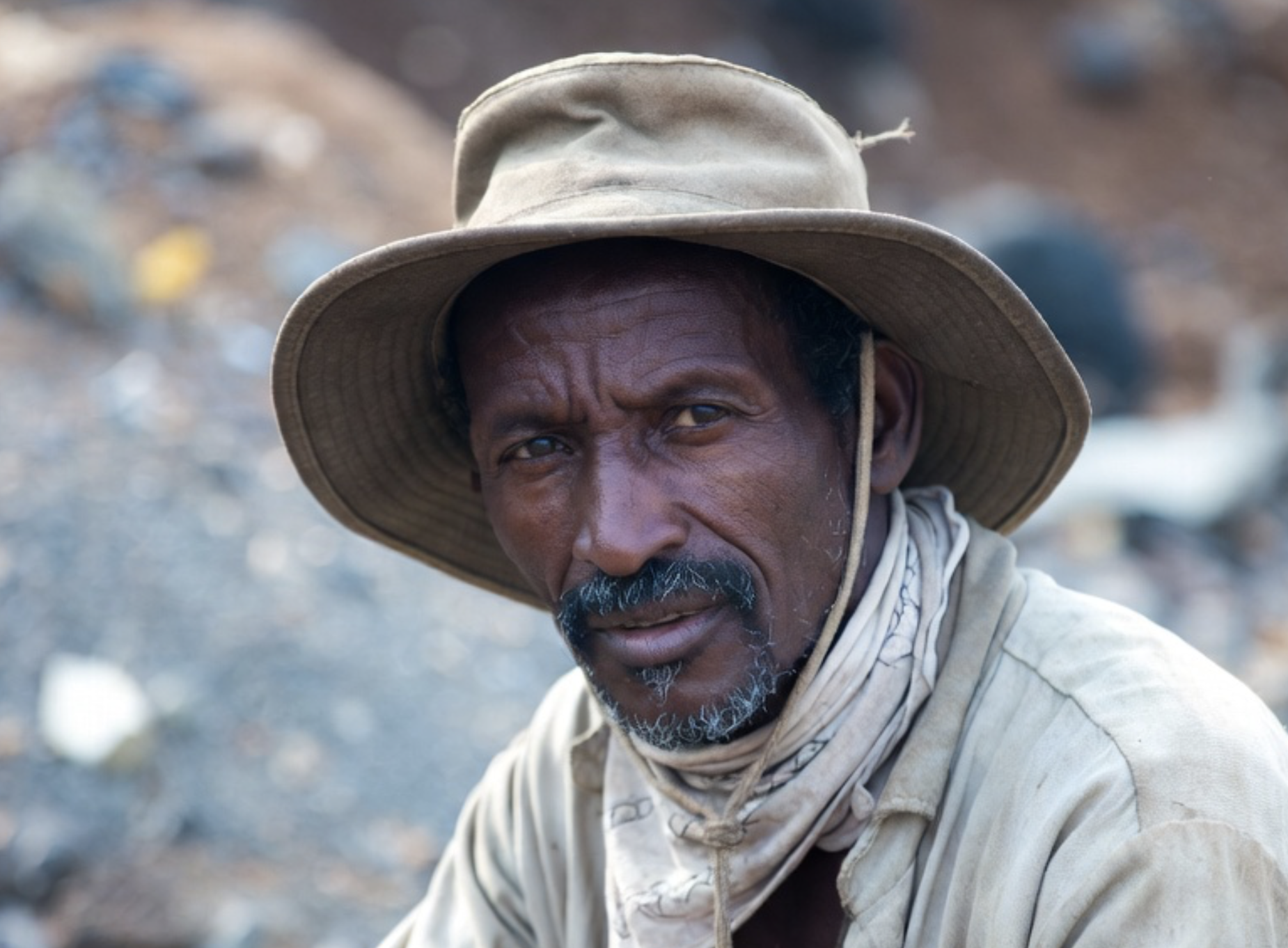
A Zimbabwe Artisanal Miner. Image: Reproduced with permission by Lori Steiger
Harnessing local knowledge from artisanal mining communities can strengthen exploration strategies while supporting responsible mineral supply chains and improved livelihoods.
⟁ OPINION | Arno Saffran, Wed 11 Mar, 2026Artisanal and small-scale mining (ASM) plays a significant economic role in many countries, providing livelihoods and income for millions of people. We believe that where ASM activity takes place legitimately, efforts should focus on strengthening responsible practices and improving safety, environmental standards and transparency.
Minerals produced through ASM are an established part of global supply chains. We support the work of responsible sourcing initiatives and international organisations seeking to raise standards, improve traceability and reduce the risk of human rights abuses associated with informal mining.
Governments, communities and development partners across Africa are working to address the underlying drivers of ASM-related challenges. These include structural poverty, limited access to education and a lack of awareness about the environmental and safety risks associated with informal mining practices.
A largely untapped source of geological intelligence
In many emerging mining jurisdictions, artisanal miners operate continuously within river systems, terraces and weathered surface environments. These activities often precede formal exploration and, in some cases, persist alongside large-scale industrial mining operations. Through repeated engagement with local terrain and mineral occurrences, artisanal miners develop an intimate understanding of where gold is found, how it behaves within drainage systems and which areas remain productive over time.
Historically, professional exploration teams have often avoided engaging with artisanal mining communities. Concerns have ranged from operational safety and security risks to the complexities surrounding informal land access, environmental impacts and regulatory compliance. The absence of systematic production records and the potential overlap with licensed concessions have further discouraged interaction.
Yet this caution has also meant that exploration programmes frequently overlook a potentially valuable dataset. With appropriate governance, community engagement and risk management frameworks in place, information emerging from artisanal mining areas can provide critical insights that sharpen exploration targeting and accelerate the identification of primary gold systems.
Understanding the environments artisanal miners exploit
Artisanal miners most commonly recover gold from secondary deposits rather than from hard-rock sources. These deposits typically occur within modern river channels, ancient drainage systems and terrace sediments formed through erosion and redeposition. Extraction methods remain relatively simple, involving tools such as pans, sieves and improvised washing tables.
In some instances, miners also work shallow weathered profiles, including laterite and saprolite, where the breakdown of primary mineralisation has concentrated gold near the surface. However, direct exploitation of primary deposits is far less common.
Gold distribution within these secondary environments can be highly complex. Some alluvial systems represent the residual remnants of primary sources that have already been fully eroded. In others, gold continues to be replenished through ongoing erosion upstream, particularly during seasonal flooding events that mobilise material from active source zones.
For exploration geologists, this dynamic behaviour is critical. Drainage systems are not static geological environments. Flow directions, sediment transport pathways and depositional settings can shift over time, redistributing gold in ways that obscure the location of the original source. In some cases, drainage reversals and multiple phases of sediment reworking produce intricate dispersion patterns that complicate the interpretation of gold anomalies.
Indicators that help identify nearby primary sources
Despite this complexity, several signals within artisanal mining environments can help exploration teams assess the likelihood that a nearby primary gold source exists.
Five indicators are particularly useful:
Confirmed gold recovery within the area of interest. The presence of recoverable gold is the starting point for any exploration hypothesis.
Persistent artisanal activity over long periods. Sustained mining often indicates a consistent gold supply rather than a short-lived anomaly.
Gold grain characteristics suggesting limited transport. Morphological features can reveal whether gold has travelled only short distances.
Associated minerals preserved with gold grains. These can provide clues about the original host rock and geological setting.
Mining activity located close to known mineralised structures. Artisanal workings sometimes occur directly above weathered expressions of primary deposits.
When these factors coincide, they can point exploration teams toward areas where a hard-rock source may be located nearby.
The role of remote sensing and spatial analysis
Modern remote sensing technologies allow exploration geologists to analyse artisanal mining patterns with far greater precision than in the past. Satellite imagery, historical aerial photography and digital mapping tools can reveal how artisanal activity evolves over time.
Because artisanal miners tend to move quickly when deposits become depleted, their movements often produce clear spatial patterns across a landscape. Tracking these shifts can help geologists identify zones where gold production has remained most persistent or where newly productive areas have emerged.
Additional tools such as LiDAR surveys provide further insight by revealing drainage networks, ancient river channels and historic workings that may be hidden beneath dense vegetation. When integrated into exploration datasets, these observations can guide field investigations and prioritise drilling targets.
Interpreting gold grains to trace their origin
Another valuable source of information lies in the physical characteristics of gold grains recovered by artisanal miners. The size, shape and surface texture of individual grains can provide clues about how far they have travelled from their original source and what geological environment they may have originated from.
Grains that retain angular shapes, irregular surfaces or fragments of associated minerals often indicate limited transport. These features suggest that the gold has moved only a short distance from its primary host, potentially within a few kilometres. In rare cases, delicate growth textures or sponge-like structures may even be preserved, offering further evidence that the grains have not undergone extensive mechanical reworking.
By contrast, gold grains that have travelled longer distances tend to exhibit smoother, more flattened shapes. Repeated transport in river systems gradually removes sharp edges and detaches any associated mineral fragments. These grains often appear as rounded or disc-shaped particles and rarely preserve geological indicators of their original host rock.
Laboratory analysis using tools such as scanning electron microscopy and backscattered electron imaging allows geologists to study these morphological features in detail. Such analyses can help classify gold grains, identify transport histories and refine models of potential source locations.
Integrating artisanal data into exploration workflows
When combined with conventional exploration techniques, information derived from artisanal mining can significantly strengthen early-stage exploration strategies. Geological mapping, geochemical surveys, structural analysis, remote sensing and geophysical data all provide critical insights into the subsurface. Artisanal mining observations add an additional layer of empirical evidence grounded in real mineral recovery.
Integrating these datasets improves the probability of identifying primary gold sources and helps exploration teams refine their targeting models in greenfield environments. In effect, artisanal mining activity becomes an informal yet powerful reconnaissance tool—one that reflects decades of practical experimentation across a landscape.
From informal observation to strategic insight
Artisanal miners rarely document their findings in the structured formats used by modern exploration companies. Yet their collective experience represents a substantial body of knowledge about the behaviour of gold within specific terrains. When approached with sensitivity, respect and appropriate safeguards, collaboration with these communities can transform informal observation into strategic geological insight.
For exploration teams operating in frontier environments, the opportunity is clear: integrate local knowledge with modern science, and the search for primary gold deposits becomes both more efficient and more informed.
References:
NB. All sources accessed March 11, 2026. URLs verified at time of publication. Unamine makes no representation as to the continued availability of external links.
How relevant and useful is this article for you?
★ 217
UNAMINE works across the mining & metals value chain, positioning people who form the critical bridge to early-stage relationships in complex regions.